Showing posts with label kindermusik classes. Show all posts

Thursday, June 24, 2010

Summer Music Activities

There’s no better way to enhance your summer fun than to blend music into your daily life. Studies have shown that learning while exercising the right brain with activities such as music helps improve creativity, memory, and language learning.

Did you know that involvement in music and movement activities from an early age helps children develop good social and emotional skills as well? Social and emotional development has also been linked to school-readiness and even higher academic testing scores.

An easy way to blend music, movement, learning and fun for your child this summer is to enroll him or her into a Kindermusik summer camp. To find a class near you, click on kindermusik.com or give Kindermusik with Angie a call: 503-708-2827!

For a few ideas to incorporate music into your family’s activities, read the activities section below!


Babies                                        0 to 18 mos

Light and motion are incredibly important to your baby’s development. You can help your baby improve his or her visual literacy by encouraging his or her eyes to move. Spread out a blanket under a shade tree and lie on the blanket with your baby. Watch the motion of the tree branches as they sway in the breeze. Watch the clouds go by and sing a favorite song. It doesn’t matter if you’re a “good” singer or not, your baby will love the sound of your voice.

You might just find the perfect sing-along song on Kindermusik’s “Wiggle, Waggle, Loop-de-Loo” CD.


Toddlers                                        18 mos to 3 yrs

Ask your toddler what kinds of sounds different animals make, repeating the sounds with him or her. Get creative with your choices, what sound does a grumpy gorilla make? Then talk about comparisons: roaring lions versus chirping robins. If you have an older toddler, add an extra challenge by having him or her make the sound of an animal that is associated with their hiding place: buzzing like a bee if they’re by the flower bed or croaking like a frog if they hide under a bush.

The perfect song for this activity might just be found on Kindermusik’s “Frog Went A-Dancing” CD.


Big Kids                                                 5 yrs & up

Go on a treasure hunt in your own backyard! Collecting things is a favorite preschool activity. Children in this age group are expanding their memory skills and the joy of finding a new or interesting item is particularly rewarding. Start out by deciding on a category that won’t be hard to find (leaves, rocks, etc.) or take along a notebook and you can write down the colors of the cars parked on the street. Once you have a goal, start your search! After you’ve done this a few times, come up with more specific and more challenging objects to seek. Below are a few additional ideas:
  • Head outside and look for things that are purple, or polka-dotted or try to find smooth things, or bumpy objects.
  • Play a music game. Try to fit songs into categories. Is it fast or slow? Loud or soft?
  • Decorate an empty shoebox for your collection!
  • If it’s too hot to go outside, give your preschooler a piece of paper with the name of a category on it. Have him or her draw pictures of items that fit into that category.
Kindermusik’s “Rupert the Wrong-Word Pirate” CD might just have the perfect “tune” to accompany this activity — after all — pirates LOVE treasure hunts!

Find these CDs, songs, activities, and MORE at play.kindermusik.com

Join in the Fun this Summer!

Wednesday, June 16, 2010

Put some music into the mix this summer!


There's no better way to enhance your summer fun than to blend music into your daily life. Studies have shown that learning while exercising the right brain with activities such as music helps improve creativity, memory, and language learning.

Did you know that involvement in music and movement activities from an early age helps children develop good social and emotional skills as well? Social and emotional development has also been linked to school-readiness and even higher academic testing scores.

 An easy way to blend music, movement, learning and fun for your child this summer is to enroll him or her into a Kindermusik summer camp. To find a class near you, click here.

 For a few ideas to incorporate music into your family's activities, read the activities section below!


Babies (0-18 mos):
Light and motion are incredibly important to your baby's development. You can help your baby improve his or her visual literacy by encouraging his or her eyes to move. Spread out a blanket under a shade tree and lie on the blanket with your baby. Watch the motion of the tree branches as they sway in the breeze. Watch the clouds go by and sing a favorite song. It doesn't matter if you're a "good" singer or not, your baby will love the sound of your voice.


You might just find the perfect sing-along song on Kindermusik's "Wiggle, Waggle, Loop-de-Loo" CD.
 
Toddlers (18 mos-3 yrs): Ask your toddler what kinds of sounds different animals make, repeating the sounds with him or her. Get creative with your choices, what sound does a grumpy gorilla make? Then talk about comparisons: roaring lions versus chirping robins. If you have an older toddler, add an extra challenge by having him or her make the sound of an animal that is associated with their hiding place: buzzing like a bee if they're by the flower bed or croaking like a frog if they hide under a bush.


The perfect song for this activity might just be found on Kindermusik's "Frog Went A-Dancing" CD.


Big Kids (5 yrs &up):
Go on a treasure hunt in your own backyard! Collecting things is a favorite preschool activity. Children in this age group are expanding their memory skills and the joy of finding a new or interesting item is particularly rewarding. Start out by deciding on a category that won't be hard to find (leaves, rocks, etc.) or take along a notebook and you can write down the colors of the cars parked on the street. Once you have a goal, start your search! After you've done this a few times, come up with more specific and more challenging objects to seek. Below are a few additional ideas:

  • Head outside and look for things that are purple, or polka-dotted or try to find smooth things, or bumpy objects.
  • Play a music game. Try to fit songs into categories. Is it fast or slow? Loud or soft?
  • Decorate an empty shoebox for your collection!
  • If it's too hot to go outside, give your preschooler a piece of paper with the name of a category on it. Have him or her draw pictures of items that fit into that category.
Kindermusik's "Rupert the Wrong-Word Pirate" CD might just have the perfect "tune" to accompany this activity -- after all -- pirates LOVE treasure hunts!

Find these CDs, songs, activities, and MORE at play.kindermusik.com 


 Join in the Fun this Summer!

Sunday, June 6, 2010

We're so much more than music ...

Kindermusik educator Maria Condon holds 24 hour concert with Kindermusik children and helps raise 14,000 Euros for Haiti earthquake victims.

Maria Condon, Waterford's first Kindermusik educator (Waterford, Ireland, that is!) came up with the idea as a fundraiser for the earthquake victims from Haiti. The Concert was the first ever of its kind in the county and possibly in the whole of Ireland to the best of her knowledge. Maria's Village, Our Time and Young Child classes took part on the Sunday morning as well as all of her piano, voice, and flute students. Other local educators' students participated as well. It was a phenomenal success and has raised just under ?14,000 to date!
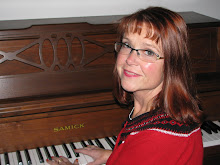
Maria stayed up for the whole 24 hours along with local piano teacher Catherine Fitzgerald and her "orchestra" of helpers! The Kindermusik kids part of the concert was a REAL treat, and they performed to a packed audience of 180 people. The concert was held in the newly built Town Hall Theatre.

"It was a fantastic showcase for Kindermusik," Maria exclaimed, and would have no hesitation in doing something similar again. It will be lovely for the Kindermusik children when they grow up and look back in years to come and know they went down in history of Ireland as the first Kindermusik classes ever to take part in the first 24 hour Charity concert. "We make a life by what we give" and it was a concert they will never forget.

For more info on Maria's programme see http://www.musicforkids.ie/. A big thank you to the E Hyland (http://www.creativeimages.ie/) who photographed the children and captured such an important event. Well done Maria and the Kindermusik children involved. All us us at Kindermusik International and Kindermusik UK/Ireland are very proud of you!

Tuesday, May 11, 2010

Toy Hall of Fame

What's in the National Toy Hall of Fame?  Posted on May 11, 2010 by juliesmusicbrioso       Lori Burkhardt, a fellow Kindermusik educator (r

What's in the National Toy Hall of Fame?
Posted on May 11, 2010 by juliesmusicbrioso

The Strong National Museum of Play, located in Rochester, New York has a terrific website, including their National Toy Hall of Fame: http://www.museumofplay.org/nthof/inductees.php    There are currently 44 toys listed, with information about each toy and why it is included.


In order to be named to the National Toy Hall of Fame, the toy must meet the following 4 criteria:
1.. Icon-status: The toy is widely recognized, respected, and remembered.
2.. Longevity: The toy is more than a passing fad and has enjoyed popularity over multiple generations.
3.. Discovery: The toy fosters learning, creativity, or discovery through play.
4.. Innovation: The toy profoundly changed play or toy design. A toy may be inducted on the basis of this criterion without necessarily having met all of the first three.

There are all kinds of toys that you might expect, from balls and jump ropes to Frisbees and Play-Doh. The one that was most fascinating was the stick. Here is an excerpt of what the Strong Museum had to say about it:

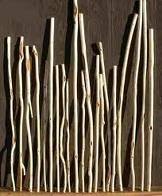
The stick may be the world's oldest toy. Children find sticks an endless source of make-believe fun. Sticks can turn into swords, magic wands, majorette batons, fishing poles, and light sabers. When children pretend with sticks, they cultivate their creativity and develop their imagination. Children build with sticks, bat balls with them, and walk with them. They are the original building blocks for creative play. Sticks also promote free play-the freedom to invent and discover. They encourage playing outside instead of inside. Sticks are all around us; they are natural and free.

What "old school" toys would to your top 5?

Monday, May 10, 2010

The Power of Music

What the Experts Say


Recent research tells us that music is the only activity that stimulates every area of the brain simultaneously – which is why Kindermusik carefully creates each class using music as the key to unlocking the brain – social, emotional, cognitive, literacy, fine and gross motor skills, language and musicality.


We’ve also learned that infants are born with billions of nerve cells and a nearly unlimited potential for connections between those nerve cells. Every time an infant has a sensory experience, neural pathways are formed. The greater the number of neural pathways, the greater the brain power. This process is largely finished by the age of five, making rich sensory environments vital to the brain development of infants and young children.


Children begin the process of brain development with nerve cells that have very sparse branches. During the first few years of life the dendrites (branches) of the nerve cells proliferate. Making these new neural connections is the basis for learning. Then, around age seven or eight, the neural networks that are used the most frequently are preserved, but those that are not being used and stimulated are pruned and die off. Kindermusik exposes children to a variety of rich experiences in order to maximize a lifetime of learning potential by helping to create dense, well-traveled neural networks.

Give Kindermusik a Try, so Fun and Powerful!
http://www.kindermusikwithangie.kindermusik.net/

Friday, April 30, 2010

Instrument Families

Remember When Pluto Was A Planet--And Then It Wasn't?
(Notes from Sing, Play and Grow: A Family Guide to Musical Fun)


We humans like to fit neatly in categories, and when the boundaries are blurred we get a little nervous.  Categories help us describe and analyze things.  Musicians use all sorts of categories: rhythms (think: tangos, salsas, and rumbas), styles (choose your radio station--pop, hip-hop, or classical), and types of instruments (woodwinds, percussion, brass and strings).  Just like planets, these categories can get a bit murky (so if a flute is make of metal, why is it a woodwind?).

During Family Time Class your child will begin to learn how instruments are organized.  Some instruments we tap and some we blow.  Some have strings, some have reeds, some are made of brass.  Putting things into categories is something preschoolers love to do.  Learning about colors, shapes, and sizes brings some order to the chaos of early childhood.  Discovering musical categories adds another dimension to recognizing similarities and differences.

"All night have the roses heard
The flute, violin, bassoon;
All night has the casement jessamine stirr'd
To the dances dancing in tune."
Alfred Lord Tennyson

SEE HOW THEY GROW

Your Infant and Instrument Families
Not even the greatest musical prodigy can distinguish between strings and woodwinds in infancy, but sorting things into categories is something adults do all the time.  (Think: winter clothes/summer clothes; junk food/healthy food; good boss/bad boss.)  As with everything else, sorting starts in infancy.  The first set of categories is broad and basic, probably something like "Am I comfortable or miserable?" which gets refined into "Am I sleepy or wakeful?" and "Am I hungry or full?"  Soon your child is exploring the world by looking around and bringing anything within reach to his mouth.  This leads to discoveries of contrasting shapes, textures, and sounds.  So before your child can recite all of the brass instruments (don't forget the flugelhorn), he'll need to develop more basic concepts such as "warm/cold."

Your Toddler and Instrument Families
Now that your child is up and about, she is able to examine and analyze everything within her reach.  As part of her play she's discovering how some things are the same and others different, and she is mentally developing categories--wet/dry, big/little, soft/hard.  She may be thinking, "Not all stuffed animals look alike, but they have a lot in common, and they don't look at all like blocks."  In the same way, she's registering that the sounds she hears when she bangs pot lids together are different from those she hears when she squeezes her favorite squeaky toy.  Because children don't have the words to assign names to categories, it's hard for us as parents to see this development taking place, but under our very noses our children are developing concepts.  This ability to translate some concrete thing to an abstract idea is powerful stuff.  When our children start talking, we get a peek at how they're organizing their world.  At first the word "doggy" may refer to all animals.  Then "doggy" may mean "dogs and cats," and finally "doggy" may mean "all dogs except Pekingese."  Your child still isn't naming brass instruments yet, but she knows that clicking rhythm sticks and tooting through a tube are two different ways to make music.

Your Preschool and Instrument Families
If you check in with a preschool teacher (or even pay attention to what you find yourself teaching your child during daily activities at home) you'll see that forming categories is at the heart of the preschool curriculum.  At this age children are learning colors, shapes, and sizes; they're learning times of day and seasons of the year.  Preschoolers are good at this kind of simple categorization--it's what they like to do.  Identifying the sections of the orchestra is too complex, but your preschooler can happily distinguish between making music by blowing, making music by strumming, and making music by tapping.  Understanding these basic divisions will help a child grasp more sophisticated distinctions when he's older.

What are your family's favorite instrument families?  Leave a comment or tweet @Angelmusik

Tuesday, April 27, 2010

Movement

A young child on the move is a great thing! Movement is not just important for helping children grow physically strong and healthy, but is also a key factor in their overall development. Movement builds self-confidence. Children feel competent, physically and emotionally, when they use their bodies to communicate and solve problems. Most importantly, movement can help children develop a close bond with their caregivers. A child's desire to be close to and connect with someone is often what motivates her to move.

Monday, April 26, 2010

There's a little drum a beating. It's my heart!

Our entire lives, our heartbeat provides a constant sense of rhythm. It's no wonder that we are all drawn to drums. Research shows that the act of drumming actually changes the chemicals in our brains, relieving stress and creating a sense of well being.

I brought a couple home made drums to class and we saw that there is no limit to the ways a drum can be made.


We will be making drums this week at home and then bringing them to Our Time class next week.

Why not make one yourself and play your homemade drum with your child and see what else you have that can be a drum.

I bet it "beats" any other activity you can think of!  Got a comment?  You can also tweet @Angelmusik

Saturday, April 24, 2010

Dew Drops and Steady Beat

Feel the beat?

In this week's Village class we found that steady beat was at the heart of every activity-exercising to "Did You Ever See a Lassie?," bouncing to an old English song, "Ride a Cock-Horse to Banbury Cross," where we actually tried riding some stick poneys and then finally rocking to the calming tune of "Greensleeves."

Steady beat is the unchanging continuous pulse in a song or chant and is an organizer for the child; purposeful and calming. Moving to a steady beat, a child develops a sense of timing, which is fundamental to the ability to organize and coordinate movements. Think of all we do that requires regularly-paced repeated motion (a sense of steady beat!): walking, running, riding a bicycle, cutting with scissors, bouncing a ball, and more.

It's easy to find the beat in a nursery rhyme. Pick out a couple of your favorite rhymes and get the nursery rhyme beat!

Here are some ideas to get you started:

a.. Holding baby and walking-just add the rhyme and walk to the beat.
b.. Drying off baby after bath time-exercise legs up and down to a rhyme.
c.. Just finished dressing baby-lap bounce to a verse or two.

Bouncing along!  Hey, leave a comment or tweet @Angelmusik

Thursday, April 22, 2010

Children need spinach, so we put it in icecream!

As the original music and movement program for children, we understand that children learn best when they can see it, hear it, touch it, and then express it in their own creative ways. Each week in class, Angie Janson, licensed Kindermusik educator leads families through research-proven and giggle-approved activities using music as the vehicle for learning.


You will find your child making new friends and learning to say letters and words confidently in a fun, safe, child-focused environment, that helps you the parent, learn how to teach your child at home. Our daily class routine, the circle dances and instrument play times will help your child learn to work together with others in a group. Our story time will introduce your child to the sounds of letters, rhyming words, musical phrases, fluency, and the love of reading. Our focus on listening will help your child attend or put his or her attention on a sound and imitate it to understand its meaning. Weekly listening practice in class and daily listening practice at home will help your child's attention span to increase, her level of interest to expand, and he or she will be ready to listen and learn everyday at school!

The learning continues throughout the week with the home materials, including a CD, storybooks, Family Activity Guide, instruments, and more. Plus, we provide you with weekly parent education and resources, including developmental emails and in-class tips so that youknow how each activity contributes to your child's overall growth and development.

Contact us to set up a free preview and to learn about our payment plans.
Classes start at $15 per week


Please comment or send a tweet @Angelmusik!

Tuesday, April 20, 2010

High and Low

High and Low
High and low pitches are basic elements used by the speaking and singing voice. As we speak the rise and fall in pitch, or inflections, can initiate different responses from Baby.  Research has discovered that exposure to high sounds plays an important part in maintaining alertness and energy required for learning. There is a tendency to need more sleep, be less active, and get ill more often when high-pitched sounds are removed from the environment.

Home Acitivty suggestions:
Use a wide variety of voice ranges as you talk to Baby. Notice the response between using a voice that is animated with wide ranges of high and low and a speaking voice that stays in the lower register.

All Fall Down

I love "All Fall Down" from Away We Go ". But we'll do it in just about every class level. From a learning perspective, it works for all age groups. And I love it because it is just plain fun.

On the off chance that you've never experienced the joy of playing "All Fall Down", let me fill in the blanks a bit. There are rules that everyone follows, so that makes it a game. Everyone gets a streamer. Parents, too. And there is music (naturally).

The music has three cues, and each cue requires a specific reaction from the players (these are the rules):

To start, everyone lies on the floor.
When you hear the crank, you get up.
When you hear the music, you dance.
When you hear the descending scale, you fall down.
Repeat until the music is over.

Then repeat again and again and again, until everyone is tired. You'll be physically tired before your child is tired of the game.

Why? Because they love this game. Here are some of the reasons I think they love it so much and will play it over and over again.

Reason One: The need to move is so powerful in the early years that any game or activity that encourages movement is going to be a hit. This particular game inspires total abandonment to movement- it is all about movement. Fast movement, slow movement, moving just your arms as the streamers fly all around you, smooth movements and jerky movements- it just doesn't matter so long as you are moving. No one feels like this game is too hard. No one feels like this game is too easy. So the success rate is 100%.

Reason Two: This game allows young children to address one of their bigger fears as new movers and walkers - falling down. Have you ever seen a child take a tumble, pop right back up, obviously unharmed, burst into tears and dash into mom's or dad's arms? They do that, not necessarily because they got hurt, but because the fall scared them.

A game where falling down is the ultimate goal is a great way to alleviate this fear. The children are in control of the falling; they learn that they can get back up again, that their brain is in control of their body throughout its range of motion. Learning to fall down helps to put the child in control of their body.

Reason Three: The game has a surprising intellectual element. There are no language cues that signal what to do. The child simply learns to recognize the sound of the descending scale pattern and understand that means it's time to fall down.

Initially, they learn by watching the grownups. I am quite sure they learn the musical cue, because after three weeks of playing "All Fall Down" in class the children are now anticipating it; they know when it's coming and get ready. A pre-schooler in "Imagine That!" dashed by me today and said "It's coming Miss Allison!!!" and she was dead on. (She was thrilled to be right- such success!) And they know how long they need to lie on the floor (it's different each time) and they don't move until they hear that crank. Which is connected to.

Reason Four: This game teaches self-control - how to wait, how to follow instructions, how to share the space with a dozen other moving bodies and not crash into them. It teaches deliberate listening and deliberate action. It is a game that is full of purpose.

It is so full of purpose that it's easy to forget the original intent of the activity is to teach the musical concepts of high and low. And it does that beautifully as well.

-posted Originally by Miss Allison from Studio 3, who wants you to head into the living room and clear the furniture and enjoy a few moments of unconstrained, falling down joy.

Friday, April 16, 2010

Music Concepts and Contrasts

What are Music Concepts?


They're like different flavors for music, adding distinction and particularity to the song or dance. Volunte could be a sirl of chocolate, making the beat more or less intense depending on how much you use. Use a dab of lemon to change the pitch--how high or low do you want to go? Then sprinkle the rhythm with chopped nuts if you want something a little bouncy or leave the nuts off if you prefer your music smooth. so many choices. So many dimensions. So many possible combinations.

Choose a musical cupcake that is right for the occasion. The bounce-along beat of Belfast Hornpipe is perfect for a car ride, while the softer lilt of Home Sweet Hom makes a lovely bedtime son.g The good news is that you have an endless variety to choose from, all are delicious, and none is fattening.

"Our life is composed, like the harmony of the worl, of contrary things, also of different tones, sweet and harsh, sharp and flat, soft and loud. If a musician liked only one kind, what would he have to say?" Michel de Montaigne


SEE HOW THEY GROW

Your Infant and Concepts and Contrasts

As parents of newborns, we're constantly monitoring our infant's environment and mood. Is the room too hot or too cold? Are the lights too bring or too dim? Is the baby hungry or did I give her too much food, too fast? At the same time, your child is learning to control her environment by closing her eyes, going to sleep, or letting you know when she's uncomfortable. This "too much or too little" aspect of infancy is a study in contrasts that has its musical counterpart in concepts like smooth-bumpy, high-low, and loud-quiet. Newborns, for the most part, avoid extremes and like things mellow. But within a few months your child will enjoy dangling high over your head then swooping down low, and will laugh delightedly when you bounce her on your lap. During Family Time you can help your baby discover thise contrasting concepts, but feel free to take her to a quiet corner of the room if the toddler's rhythm instruments get too noisy. It's alla bout discovering the difference (and balance) between loud and quiet.

Your Toddler and Concepts and Contrasts

Toddlers use their emerging body mastery to learn about rhythm--and about such basic musical concepts as "high and low," "loud (forte) and quiet (piano)," and "bumpy (staccato) and smooth (legato)." And now that their sensory systems have settled in, most (but not all) children this age will want to be challenged more than they did as infants. Toddlers learn musical concept kinesthetically--that is, they learn them by feeling them in their bodies. When you and your child move to Doot Doot Deedle-eet, first smoothly and them bumpily, your child uses his whole body to sense the difference. He may not be able to say "smooth" and "bumpy" (that's why we say it for him, over and over), but his body know just what to do.

Your Preschooler and Concepts and Contrasts

By the time he is three or four, your child will have enough control over his body and voice, as well as enough awareness about musical concepts, to use these concepts to create a specific effect. He'll be able to be "quiet like a mouse" and "loud like a lion." He'll also be learning to coordinate what he does with his body with what he does with his voice. If he pretends to be a turtle, he'll both move and speak slowly--and he'll delight in the sudden shift to being a bumblebee, buzzing and zipping around. In fact, your preschooler may know enough about these concepts and contrasts and how they relate to the real world, that he'll find it funny if you ask him to be "quiet like a lion."


Leave a comment or tweet @Angelmusik

Tuesday, April 13, 2010

Monday, April 12, 2010

Legato and Staccato

Legato and staccato are opposite styles of articulation that can be experienced many ways to help children learn these concepts. Legato is smooth and connected and Staccato is detached and bumpy. Listening, moving & vocalizing smooth and bumpy activities will help them internalize & learn about legato and staccato.

Here's an activity to practice legato and staccato (smooth/bumpy)
Get a hula hoop!

Find ways to move slowly with your hoop and pretend you are floating down a gently flowing river:

a.. Stand inside hoop & hold it while walking slowly & gently tipping the hoop from side to side.
b.. Sit inside hoop & hold it gently tipping the hoop from side to side
c.. Sing-we're floating down the river...

Jumping: exploration jumping with the hoops

a.. Place the hoop on the floor and jump in and out of it.
b.. Hold hoop while jumping.
c.. Sing-two in the middle and you can't jump...

Here's the Song!

Floating Down the River
We're floating down the river. We're floating down below,
We're floating down the river, to the O-hi-O
Two in the middle and you can't jump Josie.
Two in the middle and you can't jump Josie
Two in the middle and you can't jump Josie, Oh my Susan Brown

Like this article?  Leave a Comment or Tweet!

Tuesday, April 6, 2010

Kindermusik's 7 Philosophical Beliefs

A community of families and educators passionately committed to bringing music to children's lives through developmentally appropriate curricula, CD's, books, instruments and activities.

Kindermusik's philosophy is founded on rigorous research and our fundamental beliefs:
1. A parent or loving caregiver is a child's first and most important teacher
2. All children are musical
3. The home is the most important learning environment
4. Music nurtures a child's cognitive, emotional, social, language, and physical development
5. Children flourish in a child-centered environment where activities are developmentally appropriate
6. Educators value the learning process-not the performances of music making
7. Every child should experience the joy, fun, and learning that music brings to life

Monday, March 29, 2010

Your Preschooler and Our Voices

Preschoolers not only get most of the words to favorite songs right, they like to make up their own.  Have you ever caught your child singing her own tune when she's playing alone? The song may have nothing to do with her play--she'll be singing about little birds while putting together a train puzzle--but it's her own accompaniment to her game. Preschoolers also like to narrate their play. Sometimes they narrate out loud, and then suddenly the soundtrack goes silent as the narration becomes internal, on to emerge out loud again a few minutes later. Your child may just be the star of her own little opera! And even if she's pretty much unaware of such subtleties as staying on key, she takes great pleasure in singing to her heart's content-and she loves it when you join in. Enjoy it while you can-at this tender age your child still prefers your voice to anything on the radio, so don't be embarrassed to sing along!

Thursday, March 25, 2010

It is never too late to enroll….

We will accept new enrollments at any point in the semester providing there is room in the class. Why not come and try a preview class? When you love it, you can register that day and she will prorate the tuition for you. Payment plans are available. We don't want finances to be the cause of anyone not attending Kindermusik classes. We will work with you! Kindermusik is the number 1 best choice for your family!

Friday, March 12, 2010

Steady Beat

If you’ve ever come to a Kindermusik class, you’ll notice that we will have a steady beat activity every week, in every age group. It might involve shakers, streamers, or drums. Or singing, chanting or lap bouncing. Or maybe moving our bodies or dancing. Or even stomping, gliding or tiptoeing.


A baby hears a constant steady beat (mom’s heartbeat!) by 22 weeks after conception. And every infant is born with the ability to keep a steady beat – his own internal beat. Sometimes in a Village class, a piece of music will match a baby’s own beat, and you’ll see him or her banging away in perfect rhythm!

Steady beat for babies:
Exposure to steady beat (hearing it, feeling it, “seeing it”, being moved to it) is important for a baby’s developing sense of steady beat. An internalized awareness of beat will help him to coordinate his movements.

A baby who is beginning to internalize a steady beat will show it through rocking, nodding, patting and kicking. Later she’ll be able to demonstrate steady beat through clapping and playing a drum to a steady beat. Steady beat will be a key factor in his learning to walk.

Steady beat for toddlers:
Children 18 months through 3 years old are learning to control and coordinate their body’s movements. The ability to keep a steady beat helps in walking with a smooth gait, leading to running and jumping with confidence.

It is at this age that feeling and moving to a steady beat develops the ability to organize and coordinate movements with proper timing – like bouncing a ball and catching it.

Steady beat for preschoolers:
Steady beat competency is central to the development of movement organization, such a marching in time, dribbling and shooting a basketball, using scissors and writing smoothly. Being able to move their entire body to a steady beat leads to the ability to speak and read with a smooth cadence, thereby enhancing communication abilities.

Interesting steady beat facts:
A sample study was done of first and second string NFL players. 100% of the first string players could maintain a steady beat without any external stimulus for 45 seconds. Only 50% of the second string players could accomplish the same.

Tests show that children with steady beat internalization are better readers and more successful in math. Children with better abilities in steady beat are reported to be better behaved in class and have less aggressive physical contact with other students.

It is well-known that a stutter does not stutter when singing or using a steady beat while speaking. A stuttering student figured out her own solution: when she wanted to answer a question, she tapped a steady beat on her leg before speaking. This allowed her to answer without stuttering.

As the result of a study done in 2002 by University College in London, scientists believe that a poor sense of rhythm could be the cause of dyslexia. “Researchers concluded that an awareness of beats can influence the way young children assimilate speech patterns, which may in turn affect their reading and writing abilities.”

Steady beat helps children to understand and organize their world. So if you are going to run with scissors, make sure you’ve got a good sense of steady beat. You’ll run more coordinated and smoothly, and thereby be a little bit safer.

Monday, March 8, 2010

New Classes Starting in April

Village class: Dew Drops starting Wednesday April 7th 9:30 am, ages: 0-18 months


Our Time Class: Away We Go! starting Friday, April 2nd, 9:30 am, ages 18 mo – 3 yrs


Sign & Sing Class: Sess A/B, starting Wednesday April 7th 10:30 am, ages 6mos – 3 yrs


Angie's shared items

About Me

My photo
Portland, Oregon, United States