Showing posts with label free kindermusik event. Show all posts

Sunday, June 13, 2010

Jr Rose Festival Parade

The day started off VERY wet!


It just poured as we were setting up for our families


Thank goodness for Husbands who help!


Miss Missy and her family


My husband Keith


The dads helped set up the tent, blow up balloons and more!


Lots of Balloons!


Watching the beautiful dancers while waiting for parade to start


Our Banner Holders


These little girls held the banner all through the parade and while waiting at various points through out the day, Yeah girls!!


Walking in the Parade


Ava and Angie


My little sweetie from Our Time class 
Who also happens to be my little cousin!


We had so much Fun, hope you'll join us next year!


Thursday, June 3, 2010

Join the Kindermusik community of parents, caregivers, families, and educators!

The Community and Philosophy behind Our Program  Join the Kindermusik community of parents, caregivers, families, and educators!        At K

The Community and Philosophy behind Our Program

At Kindermusik, we truly value the idea of "community." Our community is made up of moms, dads, caregivers, grandparents, aunts, uncles, friends, and, of course, kids! We're passionately committed to bringing music into the lives of infants, toddlers, preschoolers, and young children.

Guiding our community is the Kindermusik philosophy, which is founded on years of research and the following fundamental beliefs:
  • A parent or loving caregiver is a child's first and most important teacher
  • All children are musical
  • The home is the most important learning environment
  • Music nurtures a child's cognitive, emotional, social, language, and physical development
  • Children flourish in a child-centered environment where activities are developmentally appropriate
  • Educators value the learning process-not the performance-of music making
  • Every child should experience the joy, fun, and learning that music brings
So, are you ready to sign up for a Kindermusik class near you?

Saturday, May 22, 2010

Even Newborn Infants Can Feel the Beat

� Obama Reverses Bush Policy and Seeks to Rein in Tailpipe Emissions  Emperor Penguins May Be Marching to Extinction by 2100 �  Even Newborn

I am always looking for articles on how music affects babies and toddlers.  I found a couple great articles from the Discover website at http://blogs.discovermagazine.com/80beats/2009/01/27/even-newborn-infants-can-feel-the-beat/  The following is a fantastic article on how even the tiniest of babies can feel a beat and notice changes in music.

Babies just a few days old can already identify a rhythmic pattern, and their brains show surprise when the music skips a beat, according to a new study.

Researchers played recordings that used high-hat cymbals, snare drums, and bass drums to make a funky little beat while monitoring the infants' brain activity with non-invasive electroencephalogram brain scanners, and found that newborns respond to a skipped beat in the same way that adults do.

The ability to follow a beat is called beat induction. Neither chimpanzees nor bonobos - our closest primate relatives - are capable of beat induction, which is considered both a uniquely human trait and a cognitive building block of music. Researchers have debated whether this is inborn or learned during the few first months of life, calibrated by the rocking arms and lullabies of parents.

While the researchers who conducted the new study say their findings are evidence that beat induction in innate, others argue that the newborns could have already learned to identify rhythmic patterns by listening to their mothers' heartbeats while in the womb.

In the study, reported in the Proceedings of the National Academy of Sciences, 14 sleeping newborns were exposed to repeated recordings of a rock drum accompaniment pattern and to four variations of that pattern. Babies were usually exposed to patterns with a downbeat. On rare occasions, the downbeat was missing. Of the 306 consecutive drum sequences presented to newborns, one in 10 lacked a downbeat. Each newborn wore scalp electrodes during the study. Drum sequences missing a downbeat elicited a signature, split-second brain response that has been linked in adults to the violation of one's expectations.

Lead researcher Winkler says the findings suggest that a rhythmic sensibility is very important for infants' brain development, and says it may help them respond to the rhythmic and repetitive baby talk that lays the foundation of all future language learning.  Therefore, evolution may have favored brains wired to rock for learning purposes, said Winkler, and "music went along for the ride".

Friday, May 14, 2010

BEWARE: PIRATES!!


Ahoy there Mateys!
Ye be invited to a Kindermusik Pirate Party

At The New Day Center for the Arts
5516 SE Foster Road, Portland, OR
TOMORROW 5/15/10
Saturday 10:30 - 11:30 am


RSVP: 503-708-2827


kindermusikwithangie.kindermusik.net
kindermusikwithangie.blogspot.com

Pirate boys &girls ages 2 and up
$5.00 per Child, Adults free!


All scallywags on board!
Come sailing the seas with us in this
high-spirited morning adventure. 
Dance a sea shanty, a treasure hunt
for pirate gold, face painting, snacks, 
and take home some treasures!

Tuesday, May 11, 2010

Toy Hall of Fame

What's in the National Toy Hall of Fame?  Posted on May 11, 2010 by juliesmusicbrioso       Lori Burkhardt, a fellow Kindermusik educator (r

What's in the National Toy Hall of Fame?
Posted on May 11, 2010 by juliesmusicbrioso

The Strong National Museum of Play, located in Rochester, New York has a terrific website, including their National Toy Hall of Fame: http://www.museumofplay.org/nthof/inductees.php    There are currently 44 toys listed, with information about each toy and why it is included.


In order to be named to the National Toy Hall of Fame, the toy must meet the following 4 criteria:
1.. Icon-status: The toy is widely recognized, respected, and remembered.
2.. Longevity: The toy is more than a passing fad and has enjoyed popularity over multiple generations.
3.. Discovery: The toy fosters learning, creativity, or discovery through play.
4.. Innovation: The toy profoundly changed play or toy design. A toy may be inducted on the basis of this criterion without necessarily having met all of the first three.

There are all kinds of toys that you might expect, from balls and jump ropes to Frisbees and Play-Doh. The one that was most fascinating was the stick. Here is an excerpt of what the Strong Museum had to say about it:

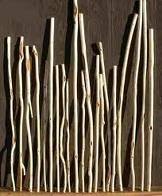
The stick may be the world's oldest toy. Children find sticks an endless source of make-believe fun. Sticks can turn into swords, magic wands, majorette batons, fishing poles, and light sabers. When children pretend with sticks, they cultivate their creativity and develop their imagination. Children build with sticks, bat balls with them, and walk with them. They are the original building blocks for creative play. Sticks also promote free play-the freedom to invent and discover. They encourage playing outside instead of inside. Sticks are all around us; they are natural and free.

What "old school" toys would to your top 5?

Saturday, May 8, 2010

Helping Children Learn at Home: Math and Science Tips for Young Children

Did you know that the games you play with your toddlers and preschoolers can influence their interest in learning math and science as they grow older? Young children are capable of learning such concepts as big and small, high and low, fast and slow, and heavy and light. By helping your children learn these concepts, you are helping them begin to learn about math and science.

According to educational experts from the National Science Foundation ("Helping Children Learn at Home," 1997), "young children are natural mathematicians and scientists" because of their curiosity and their desire to explore and experiment.

When parents encourage their children to ask questions and help children explore and discover the natural world, they are helping build an interest in math and science. Many experts say that children who have such experiences when they are very young develop an enjoyment for and a confidence in math and science that pays off as they get older.

Here are some ideas for what you can do to develop your preschooler's interest in math & science.

Go for a walk with your child. Take time to stop along the way and watch things that children notice, such as flowers, animals, and bugs. Talk with your child about what you see, and ask about what he sees.

Draw pictures together. Draw a picture of what you have seen, whether it was on your walk together, on your front steps, in the backyard, or from your window. Ask your child to draw a plant, an animal, or a favorite place, and then ask her to tell you about the drawing.

Turn a drawing into a story. Write down what your child says about the picture he just drew. Ask him to make up a story about the picture, and save it with other artwork and stories he has developed.

Listen to your child and ask questions about what she is seeing and doing. Children need to have time every day to tell another person about what they have seen or what they think. When you ask your child to tell you about a walk or a trip to the zoo, you are encouraging her to think and choose words.

Choose toys that help your child learn. Young children learn about the world primarily by playing. As a result, they need toys that encourage them to imagine and explore, which are not necessarily those that are advertised on television. Toys do not have to be expensive, but they should be simple, safe, and long-lasting.

Some ideas for toys include:
  • Balls. They can be bounced, rolled, thrown in the air, the grass, or the sidewalk. Which bounces the highest? Lowest? Which ones sink in water? Which ones float?
  • Blocks. Building blocks can be a great math and science toy because they help children learn about engineering and geometry. You can either buy a set of wooden, plastic, or cardboard blocks, or you can make your own out of egg cartons, cereal boxes, or wood scraps. For young children, make sure the blocks are big enough to handle easily and keep out of mouths. Have enough blocks in different shapes and sizes to build unusual structures. Have children paint the blocks in bright colors.
  • Puzzles. Puzzles help children learn to solve problems as well as learning about shapes, sizes, and colors. For toddlers, make sure the puzzle has some large pieces. You can make your own puzzle by pasting a magazine picture onto a piece of cardboard, then cutting it into large pieces. Or make a puzzle from one of your child's drawings. As children get older, they can do more difficult puzzles.
  • Plant a garden with your child. Planting a garden, any size, is a great family activity. A garden can be a patch of dirt in the yard or a container on a window sill, and it has a season of math and science lessons in it. Measure the space or container, determine where the plants will get sunlight, find out how much seeds will cost, count the seeds, measure the rows, watch the plants grow and chart their growth, pick vegetables, look for insects, and learn what plants need to be healthy.
  • Read to your child. Read books aloud every day. Look at picture books and talk about what you see. Alphabet and counting books are always popular, and you'll experience a sense of pride as you watch your children learn. Plan a regular time to go to the school library, pubic library or bookmobile. Enlist brothers, sisters, aunts, uncles, and grandparents to help read stories. Have your child read to you if he wants to or tell you a story based on the pictures in the book. Remember that it does not matter if you read in English, Spanish, or Chinese as long as you help your child develop a reading habit.
  • Monitor TV watching. Turn off the TV and limit viewing. Too much TV viewing takes time away from other activities. Many experts have shown that children who do things other than watch TV usually do better in math and science in school. When you do let your child watch TV, look for high-quality educational programs, and watch and discuss programs with your child to help build a habit of critical reflection.

Source:
Helping children learn at home. (1997, March 27). Pointers for Parents (National Science and Technology Week Publication SP/96-8). Arlington, VA: National Science Foundation.

Monday, May 3, 2010

MUSIC NOTES

Over the River

The familiar lyrics to Over the River and Through the Woods were written by Lydia Maria Child, whose life reads like a chapter out of Little Women. A generation older than Louisa May Alcott, Maria Child was raised near Boston and was one of the first American women to earn a living by writing. She broke into the Boston literary scene with what might be considered an early nineteenth-century bodice-ripper titled Hobomok, in which a noble Native American falls in love with a white woman. After writing more novels and starting a children's magazine, Maria married a man who was active in the abolitionist and American Indian rights movements. Maria joined in her husband's political work, but his protest writings about the Cherokee Nation's forced removal from Georgia landed the family in social and financial peril. It also landed her husband in jail.

To bring in money, Maria wrote a book called The American Frugal Housewife, one of the first advice books directed toward women who ran their households without servants. The American Frugal Housewife became a money-maker, but sales plummeted when Maria wrote an influential and controversial abolitionist tract in favor of interracial marriage. Her children's magazine also had to close. Undaunted, Maria continued to write children's works, political tracts, and novels. Throughout her life she remained an unflinching and vocal supporter of civil rights for African Americans and Native Americans.


Over the River
Over the river and through the woods,
to grandfather's house we go.
The horse knows the way to carry the sleigh,
through the white and drifted snow, oh!
Over the river and through the wood,
oh how the wind does blow.
It stings the toes and bites the nose,
as over the ground we go.

Over the river and through the woods,
to have a first-rate play.
Oh, hear the bell ring, "Ting-a-ling-ling!"
Hurrah for Thanksgiving Day-ay!
Over the river and through the wood,
trot fast my dapple gray/1
Spring over the ground, like a hunting hound!
For this is Thanksgiving Day.

"Ma Said, 'Charles, those children never will get to sleep unless you play for them.' So Pa got his fiddle. The room was still and warm and full of firelight and Pa's fiddle sang merrily to itself...And Laura went to sleep while Pan and the fiddle were both softly singing...." Laura Ingalls Wilder

Bring the Learning Home
Sort it Out
Since learning about instrument families is simply an extension of the toddler task of learning how we organize the world, our daily chores provide countless opportunities to help children form vital brain connections. Put on one of your favorite CD's and whistle while you work during family ensemble time:

  • Doing dishes: Keep your silverware in an easy-to-reach low drawer. Let your child put away clean forks, knives and spoons. Cont as you go-how many forks? How many spoons? With the silverware within reach, it's also easier to help set the table, placing the forks on the left and knives and spoons on he right. The left-right distinction can be a hard one, and this is an easy way to begin.
  • Groceries: Keep can and dry goods in bottom cabinets. Place the grocery bags on the floor and let your child put those items away.
  • Clean-up: How many magazine articles have you read that suggest organizing toys into baskets or shoe boxes? The good news is, not only does this make clean-up quicker, it's easier for your kids to help.
  • Laundry: When you're loading the washing machine, let your child help separate the whites form the darks. When everything's dry, see if he can pair up his own socks and put them in his drawer.
Sorting shouldn't be all work and no play. Collect paint chips from the home repair center and watch your child sort them into "mailboxes" made from empty tissue boxes. Buy some weather-related stickers at the hobby store and let your junior meteorologist put the appropriate one on the calendar every morning. Play "I spy shapes" by saying something like, "I see a rectangle on the wall, What do I see?" and seeing if your child can guess "picture frame!" Even babies and toddlers demonstrate a rudimentary understanding of the concept with the much-beloved "Soooooo big!" and "Sooooo Little!"

Listen and Learn
Listen to all kinds of music-brass bands, African drums, classical symphonies, flamenco guitar, jazz piano-as you work, sing, and play throughout the day. Talk to your kids about what you're hearing. What instrument would produce that sound? What might the instrument be made of? How would it be played? Do we have anything like it at home?

Maple Magic
Listen to Maple Leaf Rag by Scott Joplin. He named that tune after the 'Maple Leaf Social Club', an African-American men's association in Sedalia, Missouri where he worked as a pianist. Maple leaves have a unique shape (another category!). Help your child find a particularly fine specimen of a maple leaf or any other nicely-shaped leaf. Place your leaf, vein side up, under a piece of plain white paper, and then rub the side of a crayon firmly on the paper. The shape of the leaf will magically appear.

Friday, April 30, 2010

Why Kindermusik Before Piano?

Why Kindermusik before piano?   from Imaginations Music Studio offering Kindermusik and Piano in Birmingham by Lauren     Today in our Famil


Today in our Family Time class I had a great reminder of one of the reasons we suggest taking Kindermusik before starting piano.

The children took a little extra time today with the instrument exploration during family jam. One thing we worked on with the older kids, was trying to exercise BOTH hands, not just the favored hand. Playing the simple instruments like a drum with mallet, rhythm sticks, castanets, sand blocks and shakers work on fine motor skills and hand eye coordination required to play the piano or any other instruments. Alternating egg shakers or rhythm sticks not only strengthens neural connections between the right and left sides of the brain, but it also strengthens coordination in the non-dominant hand which is essential for piano technique.

Another aspect of the instrument exploration is that the instruments are all played in different ways thus using different muscle groups in the arms. This strengthens the fine motor muscles that control the individual fingers. Finger independence and equal finger strength is also important to learning to play the piano.

This is also important in help the child learn to hold a spoon and feed himself or learning to write. Other activities that facilitate fine motor development are the pegged puzzles, stringing beads, putting beans through a small hole in an old can, using tongs to move cotton bowls from one dish to another, or using an eye dropper to squeeze out one drop of liquid at a time. Try putting these activities where they are worked from left to right. This helps prepare them to read text as well as music from left to right.

Kindermusik provides the perfect opportunity to work on all these skills in a free environment where there are no wrong ways to play an instrument and endless outlets for creativity.

Originally from Imaginations Music Studio offering Kindermusik and Piano in Birmingham by Lauren

Saturday, April 24, 2010

Our Time Toddlers!

Toddlers are insatiable movers.

Running, jumping, and other energetic locomotor movements are valuable, appropriate, and fun activities for the Our Time child. The child's innate need to move is inextricably linked to learning. It is important to provide outlets for your child's energy as well as for her skill development. Moving and controlling one's movements are learned skills.

Toddlers are just beginning to learn to regulate their movements. One aspect of self-regulation is inhibitory control or the ability to stop oneself and to wait. Inhibitory control is important in social interactions where taking turns is involved and as such is an important skill for success in school.

"Control of the body is the first kind of  control children have over themselves and is the first step toward the
development of internal control or 'selfdiscipline.'"  -Dance for Young Children, by Sue Stinson, p. 5.

Kindermusik classes offer opportunities for children to discover new ways to move their bodies, explore their
capabilities, and practice their new skills.

Moving and Stopping

Your child may be an exuberant mover-running, leaping, jumping! Or your child may be more cautious about moving-making smaller, less energetic movements. Or, your child may be somewhere in between! All of these movement responses are perfectly normal for toddlers. Your child may be reluctant about joining in movement activities in class, but may energetically try them out at home. Your child is always learning-even if he does not appear to be actively engaged in a class activity.

Toddlers often find it difficult to stop moving. One way to help your child develop inhibitory control is to play "stop and go" games with him. These games allow your child to practice controlling his movements and to revel in his mastery of this control. One "stop and go" singing game played in class is "Walk and Stop." Sing this song at home repeating several times, changing the movement word on each repeat. Try spinning, twirling, or even crouching!

Toddlers also often have great difficulty taking turns and sharing.
This is completely natural since they cannot "put themselves in someone else's shoes." Attending Kindermusik Our Time class each week provides the opportunity for your child to interact with other children and to begin
practicing sharing and turn-taking. Activities that call for sustaining attention, following directions, or inhibiting movement or sound provide opportunities to help your child learn to monitor and modify her own behavior.

The Away We Go! curriculum provides opportunities for your child to listen attentively during Active Listening activities, to share and take turns playing an instrument during "There's a Little Wheel," and to practice waiting for the teacher to sing to him at the beginning of each class during "Our Time Hello."

At Home
  • With your child, make up a signal for "stop."  Start using the signal while playing "stop and go" games with your child. Then, you can use the signal in other situations when you wish for your child to "stop."
  • Model sharing behaviors. Make an effort to include "share" in your vocabulary when talking to your child. She needs to know what it means before she can do it.  Remember that children are very likely to imitate your actions. 
  • Play a "stop and go" instrument game with your child. Let your child play his harmonica until you give him the "stop" signal. How quickly can he stop? Play your harmonica and let him give you the "stop" signal!

Notes from a Kindermusik Our Time: Away We Go! lesson.
Leave a comment or send me a tweet @Anglemusik


Tuesday, April 20, 2010

High and Low

High and Low
High and low pitches are basic elements used by the speaking and singing voice. As we speak the rise and fall in pitch, or inflections, can initiate different responses from Baby.  Research has discovered that exposure to high sounds plays an important part in maintaining alertness and energy required for learning. There is a tendency to need more sleep, be less active, and get ill more often when high-pitched sounds are removed from the environment.

Home Acitivty suggestions:
Use a wide variety of voice ranges as you talk to Baby. Notice the response between using a voice that is animated with wide ranges of high and low and a speaking voice that stays in the lower register.

Saturday, April 17, 2010

The Human Voice:

Our voices do so much for us every day, communicating information or emotion, sounds of surprise or delight, and more. The voice is sometimes considered "the first instrument," the human voice has amazing possibility and range in speech and singing, as well as vocal sound effects. Children first participate in musical experiences by responding to them with sounds from their voices. As they grow, they begin to control those sounds, matching pitch and singing along, or singing on their own, without accompaniment. In Family Time class we will be exploring the sounds that our voices make in the next two classes, we will make glissandos, toot-toots, and more. We'll sing up high and down low, and make music together in vocal ensembles. The whole family gets to sing and play together, allowing us to experience first hand that every child and adult is musical by nature.

Here's an exercise to help children hear the difference between whispering, speaking and singing:

Rub hands together and say: whisper, whisper, whisper
Tap knees and and say: speaking, speaking, speaking
Wave arems side to side and say: singing, singing, singing

Then have them repeat after you:
This is my whispering voice (this is my whispering voice)
This is my speaking voice (this is my speaking voice)
This is my singing voice (this is my singing voice)

Here is a Silly Song you can sing!

Hey Lolly!
Hey Lolly, Lolly, Lolly, Hey Lolly, Lolly-o
This is a silly kind of song. Hey Lolly, Lolly-o
You make it up as you go along. Hey Lolly, Lolly-o

Then substitute the words: mommy, daddy etc. for Lolly

Hey comment or give me a tweet: @Angelmusik!

Friday, April 16, 2010

Music Concepts and Contrasts

What are Music Concepts?


They're like different flavors for music, adding distinction and particularity to the song or dance. Volunte could be a sirl of chocolate, making the beat more or less intense depending on how much you use. Use a dab of lemon to change the pitch--how high or low do you want to go? Then sprinkle the rhythm with chopped nuts if you want something a little bouncy or leave the nuts off if you prefer your music smooth. so many choices. So many dimensions. So many possible combinations.

Choose a musical cupcake that is right for the occasion. The bounce-along beat of Belfast Hornpipe is perfect for a car ride, while the softer lilt of Home Sweet Hom makes a lovely bedtime son.g The good news is that you have an endless variety to choose from, all are delicious, and none is fattening.

"Our life is composed, like the harmony of the worl, of contrary things, also of different tones, sweet and harsh, sharp and flat, soft and loud. If a musician liked only one kind, what would he have to say?" Michel de Montaigne


SEE HOW THEY GROW

Your Infant and Concepts and Contrasts

As parents of newborns, we're constantly monitoring our infant's environment and mood. Is the room too hot or too cold? Are the lights too bring or too dim? Is the baby hungry or did I give her too much food, too fast? At the same time, your child is learning to control her environment by closing her eyes, going to sleep, or letting you know when she's uncomfortable. This "too much or too little" aspect of infancy is a study in contrasts that has its musical counterpart in concepts like smooth-bumpy, high-low, and loud-quiet. Newborns, for the most part, avoid extremes and like things mellow. But within a few months your child will enjoy dangling high over your head then swooping down low, and will laugh delightedly when you bounce her on your lap. During Family Time you can help your baby discover thise contrasting concepts, but feel free to take her to a quiet corner of the room if the toddler's rhythm instruments get too noisy. It's alla bout discovering the difference (and balance) between loud and quiet.

Your Toddler and Concepts and Contrasts

Toddlers use their emerging body mastery to learn about rhythm--and about such basic musical concepts as "high and low," "loud (forte) and quiet (piano)," and "bumpy (staccato) and smooth (legato)." And now that their sensory systems have settled in, most (but not all) children this age will want to be challenged more than they did as infants. Toddlers learn musical concept kinesthetically--that is, they learn them by feeling them in their bodies. When you and your child move to Doot Doot Deedle-eet, first smoothly and them bumpily, your child uses his whole body to sense the difference. He may not be able to say "smooth" and "bumpy" (that's why we say it for him, over and over), but his body know just what to do.

Your Preschooler and Concepts and Contrasts

By the time he is three or four, your child will have enough control over his body and voice, as well as enough awareness about musical concepts, to use these concepts to create a specific effect. He'll be able to be "quiet like a mouse" and "loud like a lion." He'll also be learning to coordinate what he does with his body with what he does with his voice. If he pretends to be a turtle, he'll both move and speak slowly--and he'll delight in the sudden shift to being a bumblebee, buzzing and zipping around. In fact, your preschooler may know enough about these concepts and contrasts and how they relate to the real world, that he'll find it funny if you ask him to be "quiet like a lion."


Leave a comment or tweet @Angelmusik

Tuesday, April 13, 2010

Active Learning

Active Learning  Share   Yesterday at 9:11am  It has been said that on average we remember    20% of what we read  30% of what we hear  40%

It has been said that on average we remember

20% of what we read
30% of what we hear
40% of what we see
50% of what we say
60% of what we do
90% of what we see, hear, say and do
(this now becomes Active Learning)

Source - Accelerated Learning for the 21st Century by Colin Rose and Malcolm J. Nicholl

The "birds eye" above the note is a fermata.

Integrated "active" learning is what you'll experience in every one of our Kindermusik classrooms. For instance, take a fermata. A what you say? (Look left fora picture.)When you come across a fermata in music, it means to hold the note or the rest, usually as long as the conductor tells you to.

Now, you might think a 15 month old has no use for a fermata. And you'd be right. However, a 15 month old does need to learn what the fermata can teach him. To pause, hold and wait until he's told to start again. What parent doesn't want that?


To teach the concept of a fermata, we get out the parachute and sing a song. One of the lines is "Hop up, my baby, three in a row". At the word "up", we lift the parachute up and hold it. The teacher then tells the class when to bring the parachute down by resuming to sing the rest of the phrase "my baby." The pause (hold) in between "up" and "my baby"is the fermata.

The children learn and rememberthe fermata concept (pause, hold and wait until told to go) by integrated active learning:

Hearing the parachute move up and down
Seeing the parachute move and stop
Holding onto the handles and moving the parachute up and down
Feeling the wind as the parachute moves up and down
Hearing the music stop (or stopping singing as they get old enough to sing)

As children get a bit older, we play musical games like riding stick ponies, and stopping our bodies when we hear the music pause, and then waiting until the music instructs us to go again.

Hear, See, Say, Do. The perfect recipe for active learning.

-posted by Miss Analiisa, Studio 3, who loves that a paused "up" parachute even looks like a fermata!

Wednesday, April 7, 2010

Word Acquisition

Exposure to a variety of movement words helps children link movement and language at a time when word acquisition is occurring at a fast pace. "Between the ages of 18 months and 4 years children comprehend, on average, one new word for every hour they are awake. By age four, most kids know around 10,000 words.

Friday, April 2, 2010

Bring the Learning Home Part 3

I've Got a Secret
Children love whispering secrets in your ear, and learning to whisper is a wonderful way to help your children master their voices. Share secrets like "Watermelon for dessert," or "Grandpa's coming over," and, of course, "I love you!" Encourage your child to whisper back-you could even have a whole whispering conversation, if you don't start giggling first.

The Opera of Our Lives
In the mood for something silly? Try singing an entire conversation with your child. Pretend you're an opera star as you warble dramatically, "Allie, come to lunch but wash your hands first!" Make sure your child sings back! You might not keep it up for long, but you'll have fun-and learn a lot about how singing voices are different from speaking voices.

Tuesday, March 23, 2010

Singing


"Singing is related to the ability to control speech fluctuations, and speech activities appear to help develop tuneful singing skills." Playing with rhythmic speech (poems, rhymes, etc.) as well as simple tonal melodies help children develop both singing and speech skills. McDonald and Simons 1988

Monday, March 22, 2010

Our Voices

Our voices do so much for us every day, communicating information or emotion, sounds of surprise or delight, and more. Sometimes considered "the first instrument," the human voice has amazing possibility and range in both speech and singing, as well as vocal sound effects. Children first participate in musical experiences by responding to them with sounds from their voices. As they grow, they begin to control those sounds, matching pitch and singing along, or singing on their own, without accompaniment.

In Family Time class we sing up high and down low, and make music together in vocal ensembles. The whole family gets to sing and play together, allowing them to experience firsthand that every child (and adult) is musical by nature.

Friday, March 19, 2010

                              Be Our Guest -
A Royal Princess Party

Experience the magic and wonder of a princess music & dance party including a princess fashion show, light snacks, face painting and royal take-home treats for our little majesties.
Costumes are a must - or just wear your fancy clothes!
Queens and Kings are welcome to join in the fashion show.
This will definitely be a morning to remember!


Saturday, April 10th 10:30 - 11:30 am
The New Day Center for the Arts 55th&Foster

RSVP: 503-708-2827 / jansonfamily@spiritone.com

Ages: Princesses 2 and up.
Must be accompanied by a King or Queen.
The cost of our Royal Princess Party is $5 per child. Adults free.


Presented by Kindermusik with Angie
kindermusikwithangie.kindermusik.net; kindermusikwithangie.blogspot.com

Thursday, March 11, 2010

Party This Saturday!

Come Celebrate The Arrival of Spring With Kindermusik!

We’ll be Welcoming the Spring with Music!

Singing, Dancing, Instruments and Face Painting with Miss Yvette

Saturday, March 13th  10:30 - 11:30 am
at
The New Day Center for the Arts
5516 SE Foster Rd, Portland

RSVP: 503-708-2827 / jansonfamily@spiritone.com
Free Book to all who attend!

If you are unable to attend call to set up a Free preview class!

Friday, March 5, 2010

Your Preschooler and Concepts and Contrasts

By the time he is three or four, your child will have enough control over his body and voice, as well as enough awareness about musical concepts, to use these concepts to create a specific effect. He'll be able to be "quiet as a mouse" and "loud like a lion." He'll also be learning to coordinate what he does with his body with what he does with his voice. If he pretends to be a turtle, he'll both move and speak slowly and he'll delight in the sudden shift to being a bumblebee, buzzing and zipping around. In fact, your preschooler may know enough about these concepts and contrasts and how they related to the real world, that he'll find it funny if you ask him to be "quiet like a lion!"

Angie's shared items

About Me

My photo
Portland, Oregon, United States