Showing posts with label toys that stimulate brain growth. Show all posts

Tuesday, May 11, 2010

Toy Hall of Fame

What's in the National Toy Hall of Fame?  Posted on May 11, 2010 by juliesmusicbrioso       Lori Burkhardt, a fellow Kindermusik educator (r

What's in the National Toy Hall of Fame?
Posted on May 11, 2010 by juliesmusicbrioso

The Strong National Museum of Play, located in Rochester, New York has a terrific website, including their National Toy Hall of Fame: http://www.museumofplay.org/nthof/inductees.php    There are currently 44 toys listed, with information about each toy and why it is included.

In order to be named to the National Toy Hall of Fame, the toy must meet the following 4 criteria:
1.. Icon-status: The toy is widely recognized, respected, and remembered.
2.. Longevity: The toy is more than a passing fad and has enjoyed popularity over multiple generations.
3.. Discovery: The toy fosters learning, creativity, or discovery through play.
4.. Innovation: The toy profoundly changed play or toy design. A toy may be inducted on the basis of this criterion without necessarily having met all of the first three.

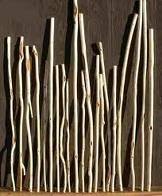
There are all kinds of toys that you might expect, from balls and jump ropes to Frisbees and Play-Doh. The one that was most fascinating was the stick. Here is an excerpt of what the Strong Museum had to say about it:

The stick may be the world's oldest toy. Children find sticks an endless source of make-believe fun. Sticks can turn into swords, magic wands, majorette batons, fishing poles, and light sabers. When children pretend with sticks, they cultivate their creativity and develop their imagination. Children build with sticks, bat balls with them, and walk with them. They are the original building blocks for creative play. Sticks also promote free play-the freedom to invent and discover. They encourage playing outside instead of inside. Sticks are all around us; they are natural and free.

What "old school" toys would to your top 5?

Monday, May 10, 2010

Toys! Toys! Toys!

Part of the fun of having a baby is shopping for the toys. Take a peek at this quick list to see what babies like to play with.

Babies learn by interacting with loved ones and by exploring their surroundings. Babies' brains are constantly developing connections that are created by what they see, hear, feel, taste and smell. The following toys stimulate our babys' senses and help our babies learn.

Toys that babies can enjoy!
  • Music: Babies are never too young for music. Sing songs, play CD's with nursery rhymes, and buy a musical mobile. Expose your baby to a variety of music and see what type he prefers.
  • Baby gyms/activity centers: These offer a lot of interesting stimulation. The bright contrasting colors and interesting shapes and sounds they make stimulate your baby's brain. As your baby grows and learns how to reach out to grasp at objects, these activity centers become even more interesting. Change them around as much as you can to keep your baby's attention. Many have clips that you can put different items on - take advantage of this and get creative with it. Play mats that have different textures are also a good idea.
  • Soft toys: These are fascinating to babies. They love soft toys with distinct facial features. Soft toys come in a variety of textures, which provide a way for babies to learn through their sense of touch.
  • Mobiles: These come in a variety of different styles, shapes, sizes and colors. If you want a visually stimulating one, you'll have to do a "sight test." Most mobiles have lovely attachments but what's the use if all your baby sees is a boring underside of a toy. Get under the mobile or hold it above your head to see what your baby will really be looking at! If it looks interesting and if it has a good variety of contrasting colors - then you've got a winner!
  • Toys with noise: Rattles and wrist toys are great for babies up to 6 months of age. From about 4 months, he'll enjoy playing with "squeaky" toys that he can squeeze to make sound. This is an excellent toy for learning cause and effect.
  • Balls: soft balls covered in textured materials that have little chimes or bells in them are enjoyed by most babies. Just slowly roll the ball back and forth in front of your baby - she'll delight in the sound and movement of the ball. As your baby grows, she'll learn how to roll the ball all by herself.
  • Books: Reading to babies is such a valuable activity. Choose books that are short and uncomplicated. Make sure the pictures are simple and have contrasting colors. Board books and cloth books are fun for this age. Bath books are a good idea too. To enhance your baby's sense of touch, introduce simple touch and feel books. Talk about the feel of the different textures.
  • Shape sorters: From about 9 months of age, your baby will enjoy using these toys as they help to develop eye-hand coordination.
  • Nesting cups are also good for babies this age.
  • Building blocks: These are one of the most versatile toys around. Babies are not yet ready to build, but they will enjoy knocking down towers that you build for them! They will also gain a sense of pride when they learn how to bang them together! Choose ones that have bright colors.
  • Pop up toys: At around 9-10 months, your baby will most likely be able to learn how to use these simple pop up toys. They're excellent for developing cause and effect.
  • Musical instruments: A small drum or a xylophone is a definite winner. They teach eye-hand coordination; and it is also a good idea to show your baby how to use them because they learn by imitation.
  • Puzzles: As your baby approaches 12 months, you might begin introducing very simple puzzles. I'm referring to puzzles that have two pieces and ones that have simple shapes, such as a circle. Once again you'll need to show your baby how to use them.

Angie's shared items

About Me

My photo
Portland, Oregon, United States