Toddlers Throw Temper Tantrums!!
My son used to throw terrible tantrums. When he got frustrated or overstimulated he would just blow up, screaming and jumping up and down, hitting and kicking. I could barely bring myself to take him out in public because I never knew when he would blow. Guess what? He grew out of it and I learned how to cope with it and now he is nine and tantrum free! Of course at nine we have new issues, but that is for another article.
An article written by Dr. Sears has some great information and advice in how to deal with
Toddlers and thier
Tantrums. Even though my son is older, I found this information to very useful. http://www.askdrsears.com/html/6/t063300.asp
Most toddlers throw temper tantrums. It's a typical stage of child development. To understand why your toddler throws a fit, put yourself in his place. A toddler has an intense desire to do things, but his mental and motor skills have developed more quickly than his ability to communicate. Because he doesn't yet have the verbal skills to express his frustration, he does so by throwing tantrums. But you should know that tantrums often come in two flavors: manipulative tantrums and frustration tantrums.

If you feel that your child is using tantrums as a tool to get his own way, give him verbal cues and use body language that says you don't do tantrums. Be aware that toddlers know how to push their parents' buttons. If you are a volatile person, it'll be easy for your child to trigger an explosion from you, ending in a screaming match with no winners. You send a clear message when you ignore his fits or walk away. This teaches him that tantrums are not acceptable. This is part of toddler discipline.
Frustration tantrums, on the other hand, require empathy. Take these emotional outbursts as an opportunity to bond with your child. Offer a helping hand, a comforting "it's okay." Help him out where he feels frustrated at not being able to accomplish a task. This way you establish your authority and build your child's trust. Direct his efforts toward a more manageable part of a task. For example, if he throws one of the common "I'll do it myself" fits about putting on his sock, you slip it halfway onto the foot, and he can pull it on the rest of the way. Sit down with him at eye level and caringly say, "Tell mommy what you want." That encourages him to use words or body language to communicate his feelings and needs so that he doesn't have to act them out in displays of anger.
Identify the Trigger
Tantrums are usually at the worse time for parents: when they are on the phone, at the supermarket, or busy in some other way. Think about it. The very circumstances that make a tantrum inconvenient for you are what set your toddler up for an outburst. Keep a tantrum diary, noting what incites your child. Is she bored, tired, sick, hungry, or overstimulated? Watch for pre-tantrum signs. If you notice a few moments before the flare-up that your baby is starting to whine or grumble, intervene before the little volcano erupts.
Don't Take it Personally
You are neither responsible for his tantrums nor for stopping them. The "goodness" of your baby is not a reflection on your parenting ability. Tantrums are common when a baby starts to strive for independence.
Stay cool
Temper tantrums in public places are embarrassing, often making it difficult to consider a child's feelings. Your first thought is more likely to be "what will people think of me as a parent?" If you feel trapped and embarrassed when your child is throwing a fit in a supermarket, don't lash out. She is already out of control and needs you to stay in control. Just calmly carry her (even if she's kicking and screaming) to a private place, like the bathroom or your car, where she can blow off steam, after which you can quietly settle her down.
Plan ahead

To expect a curious toddler to be the model of obedience in a supermarket when he is tired and hungry is an unrealistic expectation. Shop when you both are rested and fed, and let him be your helper from the safety of his belted shopping-cart seat. The morning is usually the best time for toddler behavior; in the afternoon he's more likely to be tired and hungry.
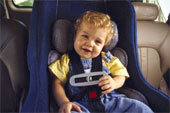
To help parents gain perspective on the tantrum stage, we've divided fits into "biggies" and "smallies." Staying in the carseat is a biggie. It is non- negotiable and all the theatrics in the world will not free the safety-contained protester. But whether she should wear a red shirt rather than a blue one is a smallie. A clothing mismatch isn't worth a fight.
Occasionally, a very strong-willed child will lose control of himself during a tantrum. If often helps to simply hold him firmly, but lovingly, and say, "You're angry, and you have lost control. I'm holding you because I love you." You may find that after a minute or more of struggle, he melts in your arms as if to thank you for rescuing him from himself.
In general, don't ignore a frustration tantrum. Turning away from her behavioral problems deprives her of a valuable support resource, while you lose the chance to improve your rapport with your tantrumer. Once your toddler develops the language skills to express her needs in words, you'll be able to close the book on the tantrum stage. This usually happens between two and two- and-a-half-years-of-age, depending on your child's language development.
UNDERSTANDING THE TANTRUM-PRONE CHILD
Some kids are more inclined toward tantrums than others. Children with high needs, strong wills, and who have trouble controlling their emotions are more likely to fall into tantrum behavior. They have more difficulty achieving equilibrium, an inner emotional balance that helps people bounce back from life's many setbacks and regain composure. These babies have problems emotionally in two ways: they are more prone to blow their lid, and they are less able to put the lid back on once it has blown.
Some of the traits that make children more prone to tantrums, such as sensitivity, persistence, determination, and creativity, can be very beneficial to a child's intellectual and social development. One of your tasks as a parent is to channel these qualities to happier ends. Now that you appreciate why your usually sweet baby occasionally turns sour, here is how to head off tantrums and deal positively with them when they occur.
Words before action. Words give power over feelings and frustrations. Parents who talk with their babies and toddlers, teaching them language in the daily flow of living, are equipping them to handle the moments of frustration and strong feelings. If a toddler can be given a word or two to say in a moment of conflict, he will often be able to cooperate with you because saying that word gives him mastery over the concept he's struggling with.
3 WAYS TO PREVENT TANTRUMS
1. Practice attachment parenting
We have noticed that infants who are carried a lot and whose cues are sensitively responded to are more mellow, less prone to tantrums, and are able to ride the waves of emotional upsets without falling apart so drastically. Because they operate from an inner peace, they are less prone to impulsive behavior or angry outbursts. Children, however, who are parented with less attachment are less able to recover from emotional storms. Attached parents can read their child so well that they naturally create conditions that minimize tantrum behavior. Practice as many of the attachment styles of parenting as you can, as often as you can. Making it easier to deal with temper tantrums is one of the immediate payoffs of attachment parenting.
2. Minimize the triggers
Tantrums usually occur at the worst time for parents: you are on the phone, at the supermarket, busy with your agenda. Think about it. The very circumstances that make a tantrum inconvenient for you are what set the toddler up for a tantrum. Wise parents avoid situations that lead to emotional overload in their children. Keep a tantrum diary, noting what sets your child off. Is he bored, tired, sick, hungry, or overstimulated? Prepare a behavior chart. Making this chart will help you analyze what you know and observe about your child. Behavior charts also help you create conditions that encourage calm behavior. You may discover that tantrums occur most often before naptime or bedtime, or when parents are busy making dinner. They may happen when you return home from a play date at a friend's house all morning. The chart may show that the child behaved well during meal preparations when he was allowed to help and nibble. Learn from this bit of childhood history so that you don't have to repeat it. When you discover a tantrum-prevention technique that works, use it again.
Even with your best efforts, tantrums will still erupt from time to time. Try to diffuse them early. Know your toddler's pre-tantrum signs - body language that signals the coming storm. Our Lauren has a short fuse. The slightest setback can cause her to fall apart. When she is trying to retrieve a stuck toy from beneath the couch, I stand by and watch as she pulls on the toy, her face getting redder and murmurs some angry sounds. I intervene early, after only one or two unsuccessful attempts on her part to retrieve the toy. Once those murmurs begin, she can no longer think straight. With our children who had more patience at that age, I would stand in the background and let them work on their problem a bit longer. In parenting the tantrum-prone child you must learn to strike a balance, knowing when to stand by and let the child work through the difficulty on her own, and when to intervene. Be careful, though, not to protect your child from ever being frustrated. It would be impossible for parents to arrange life so nicely for a child who is already of a mild temperament that he would not be getting a healthy share of frustration. Then he'll enter the next stage not knowing how to say "no" to himself, or handle frustration . A child will not learn how to solve problems unless he has problems.
3. Know your anger buttons
Some toddlers, behaviors push parents' anger buttons a lot, and some parents have very sensitive buttons. The combination of the tantrum-prone child and a parent with a short fuse is at risk for major conflicts. You'll learn quickly how a mature response to your child's tantrum can mean the difference between your child raging, totally out of control, and your child being normally frustrated. Identify which behaviors cause you to blow easily. Assess how you react to your toddler. If you regress to tantrum behavior yourself, seek professional help to get your buttons reset.
HELPING TODDLERS HANDLE TANTRUMS
Even after you do your best to create an attitude within your child and structure the environment in your home to prevent tantrums, they still occur. Here's what to do when the little volcano blows, at home, in public, or at Grandma's house:
- Don't take it personally. Normal tantrums are a result of your child's development and temperament, not your parenting. Tantrums are due to frustration (your toddler is trying a complicated engineering feat, and howls when it goes wrong), so don't ignore this need for help. Take this tantrum as an opportunity to connect: By helping your child out of a tight spot, you build authority and trust. Offer a helping hand, a comforting "It's okay," and direct his efforts toward a more manageable part of the task (for example, you slip the sock halfway onto the foot, and then he can pull it on all the way).
- Verbalize. Children just need to blow off steam. You can help your child by verbalizing for him what he can't say himself: "You are mad that Mommy won't let you have candy."
- Holding therapy. Other times, when they have lost control, they want someone bigger and wiser to take hold of them lovingly and securely take charge. Try: "You're angry and I'm going to hold you until you get control of yourself because I love you." Soon the tantrum will fizzle and you will feel your flailing child melt into your arms as if thanking you for rescuing him from himself.
- Feel your way through the tantrum
- Avoid forceful restraint. If holding makes your child furious and escalates the tantrum, loosen your hold or quit holding. Your child needs support, not anger. (Forcefully holding onto your child when your child needs to release from you is controlling too much.)

The tantrum-throwing child under two will most often need the holding approach. He can't talk about his problems. Your strong arms in place around him give the message that since he's out of control you have stepped in to help him hold himself together. You may or may not be heard, but you can speak softly near his ear with reassuring phrases like "Mama's here. I'll help you. Show me what you need," and so on. Don't coddle and don't allow his kicks and flails to hurt you. If you can't contain him and he hurts you, calmly put him down next to you and stay as close as you can without letting him hurt you. When to hold the child and when to just be on stand-by is a tantrum-by-tantrum call.
Time-out the tantrum. If neither ignoring the tantrum nor comforting it seems appropriate, remove the child from the triggering circumstance and call for a time-out. For example, if your child throws a tantrum in the supermarket, calmly pick him up and head for the car.
For tantrums at grandma's house (often the ones that embarrass parents the most because it is in the presence of their own parents and in-laws that they feel the most scrutinized), it helps if you are able to share your tantrum strategy ahead of time so Grandma knows not to sabotage your approach, and also so she knows you really are in charge of her grandchild and she can just relax and watch you parent. It might be similar to what she did when she was a mom, or it might be very different. But it will help your perspective on things if she says to you something like, "He's just like his dad. I had lots of days like this, and we both survived." Then you can both share a laugh and you may get to hear some wisdom from one who's been there.
MANAGING TANTRUMS IN OLDER CHILDREN
As a child nears three years of age, tantrums lesson because he now has the language to express himself, and he's busy developing in other areas of his life (such as imagination is blossoming, and more fears are surfacing. Tantrums may reappear at four with a surprising twist. A four-year-old is smarter, stronger, louder and more adept at pushing parents' buttons. The child now realizes he has his own power in the family, and that can be threatening to some parents. It is important not to squelch an emerging personality by overreacting.
Give a positive message. Give your child clear messages of what you expect. Be positive and specific in your instructions: "I expect you to be polite at Grandma's. We can show her your new books and maybe she'll read one to you. After lunch, we'll go home." This is more meaningful to a child than "I won't tolerate tantrums, and I expect you to be good." You can't reason with a child during a tantrum, but you can before it occurs.
Give your child other outlets for emotional overload other than tantruming: "Use your words instead of your body to get what you want." Help him use his body positively -- lots of opportunities for motor activities and outdoor play. (Get an old mattress or a mini-trampoline to bounce on.) Play lively music to dance to and have jumping contests. Encourage him to draw what he's feeling on a "tantrum table." After a tantrum, ask him to "draw angry pictures about what you feel." You can do this yourself when you're angry and talk about what you're doing: "I'm drawing angry lines and angry faces!" What really helps is for your child to see you manage your temper tantrums. When you're angry, try lying on your bed, kicking, and hitting the bed. Or, say "We're going on an angry walk. Get in the stroller." If you are beginning to realize this is a problem area for you, now that you have little eyes and ears soaking up your every move, you will want to get help on managing your anger. Having children forces adults to take stock of their own emotional maturity. We've all been there to one degree or another, so don't be embarrassed to admit, even to yourself, that there are changes you would like to see take place in you, so you can be a calmer parent.
Don't reinforce tantrums. Don't let your child use a tantrum as a means to an end. If he knows that as soon as he gets within grabbing distance of the candy at the check-out counter in the supermarket all he has to do is pitch a fit and you'll give in to quiet him down, then he's already conditioned to begin his act as soon as you approach the counter. Next time explain before you enter that high-risk area: "We are not buying any candy, so it won't do you any good to fuss. You can help mommy put the groceries on the counter. Remember, we're buying frozen yogurt to have at home." A friend tells us she handles private and public out-of-control tantrums differently. In private, she becomes so bored by the tantrum that it soon stops. In public, she says sternly to the child, "You may not embarrass me," -- and the child believes her.
Just Say No! One day I was with our then five-year-old, Lauren, at the supermarket check-out counter. (I reason that if the store is silly enough to risk putting candy in front of children, the management deserves the behavior they have caused.) Lauren threw a tantrum in protest. I kept saying "no" to the candy request. Finally, she got the message that "no" means "no", finally! The clerk later whispered to me "I wish more parents would say "no" to their children."
Ignore it? Whether or not you ignore a tantrum should depend on what you think the cause is. If you judge that the child is pitching a fit to gain your attention, ignore it. By you not reinforcing tantrums, your child will get the message that this behavior is not acceptable: "It gets me nowhere, I might as well be a nice person" (Then be sure to reinforce the nice person.) If you're going to ignore the tantrum and walk away, leave your child with the message that you are available: "Eric, you must really be angry. When you calm down, I will try to help." Then you walk away, though not far, and allow the child to regain his composure. Shouting "shut up" and storming off closes the door to communication and escalates a tantrum.
Instead of walking away from the tantrum, you could try the homebase approach. Stay nearby the scene and keep busy: read a book. Don't get drawn into the tantrum or start arguing. If the tantruming upsets your harmony or the child wants to get physical, you need to walk away. A phrase we use is: "That's disturbing my peace." Remember, a tantrum will go on as long as it can hold an audience. Big audience reactions will be rewarded with an encore. Sometimes, announcing "I'll be here when you're ready to calm down and talk" is enough to motivate the child into changing characters.
He is now big enough to hurt you
When a two-year-old goes out of control, you can usually physically take charge. This is not so with the four-year-old or older. He is now big enough to hurt you. You may feel like locking him in his room, but a safer option would be for you to lock yourself in your room until he is able to calm down. If you feel angry enough to hit your child immediately separate yourself from your child. Some mothers have put a child in a room and have found that the child destroys property. If he destroys toys, remember they are his toys, and you will not replace them. If he destroys parts of the room (breaks a window, dents walls, and so on), he will be shocked at his own angry power the first time it happens. It will most likely not be repeated because it is so scary. The older child can be required to work off what it costs you for repairs. If this destructive behavior does happen again, you will need professional help to sort it all out. There is just too much anger there. A sudden onset of tantrums is a clue to put on your detective hat. There is likely to be a problem going on in your child that needs solving.
One mother we talked with, who is also a psychologist, acknowledged her large part in escalating tantrums. She would keep talking, and engaging the child in battle. What she learned was she should have stopped talking and just done something to bring the tantrum to a close.
HANDLING TANTRUMS IN PUBLIC
Just like at home, kids throw tantrums in public when they don't get their way. Let's say you take your child to the supermarket and he feels he absolutely must have a candy bar. When you say "no", there is a clash of wills that can result in a tantrum. Many public places, such as stores and amusement parks, are overwhelming for children because there are so many things they want but can't have. At home, you can walk away and say, "I'll come back and play with you when you give me your nice voice. If you want to scream, you can go outside." But in public, if your child's volcano erupts, you can't just ignore it because his behavior is disturbing other people.
In a soft voice say, "I know you're upset, but it's time to calm down". Stay in control because if she picks up that her tantrum is getting to you, and it probably is because you're concerned about what other people are thinking, she'll scream even more. Your anxiety reinforces hers. If she doesn't calm down, take her to the car. If she won't walk, carry her. Once there, hold her, look her in the eyes and say, "I know you are out of control. I am in control and am here to help you. I understand you are really upset because you want that candy bar (or whatever else prompted the tantrum), but here are the reasons why you can't have it. We can talk about it more once you calm down. But until you do, we are going to sit here." Eventually, he will get bored sitting there and quiet down.
Even though it seems easier to just give the kid the candy bar and get out of the store, everyone's looking at you, and you're wondering, "What did I do wrong? Mine is the only child out of control." However, your child has to learn that tantrums are not a means to an end, otherwise, he'll pitch a fit the next time you're in a similar situation.
Don't think other people are judging you. Nowadays, with lots of parents on the go with their kids, people are more accepting of public tantrums because they've been there, and if you can remain firm and calm in the face of a tantrum, I think people appreciate it. Yes, a few people may stare, but usually no one will say anything. Just focus on your child, and tune out everyone else. In fact, other shoppers appreciate parents taking a firm stand with their children. One time after saying "no" to our five-year-old, Lauren who wanted a candy bar at the checkout counter, the clerk said to me: "I wish more parents would say "no" to their children."
Plan ahead
"When we're finished shopping, we'll get an ice cream cone. Help mommy finish shopping." Let your child help you pick out canned goods, etc. When little hands are busy, little minds get less upset. Hunger and fatigue can trigger tantrums, so make sure your child is fed and rested before you go out. Boredom can also drive a tantrum. If you're shopping or running an errand, keep her mind and body busy so she won't have time to be bored: "I need you to help mommy pick out a dress."
KINDERMUSIK SIGN AND SING CLASS
Another way to deal with and prevent toddler temper tantrums is to learn to communicate with your baby before he or she becomes a toddler.
Benefits for Your Child and You
- Communicate with your child even before she can form the words.
- Ease a child's frustration by helping her communicate what she needs, speed language development, and enhance long-term learning abilities.
- Reduces temper tantrums since small children can communicate thier wishes and needs
- Know when your child is most ready to interact and learn.
- Learn sign language teaching methods, such as making the sign on a child's body, on the floor, or hand over hand.
Through songs, toys, and loving playtime between you and your child, Kindermusik Sign & Sing shows you more than 50 signs your child can use to communicate with you. Using research-proven methods shown to speed language development in hearing children, you'll see how sign language can ease frustration and enhance long-term learning abilities for your child.
Songs and fingerplays. Already accustomed to fingerplays and rhyme-songs—such as "This Little Piggy"—you'll easily substitute American Sign Language (ASL) signs in familiar songs, improving your child's language skills, fine motor skills, and strengthen fingers for zipping zippers and using scissors.
Learn when you play. You'll never have to memorize a list of signs. This curriculum gives you the ASL signs that are most useful to you, and most interesting to your child. So playtime and everyday items around the house—ball, bubbles, mom and dad—become theobjects of learning in the classroom, and sign language becomes a natural, happy part of your child's day.
Hearing children who know signs, learn language almost twice as fast. As early as 11-14 months old, hearing children exposed to sign language put little sentences together faster than non-signing children, who do not begin to combine words into short sentences.
Do you have a Toddler who is in the Middle of the Tantrum Years? Share your best tantrum story!